
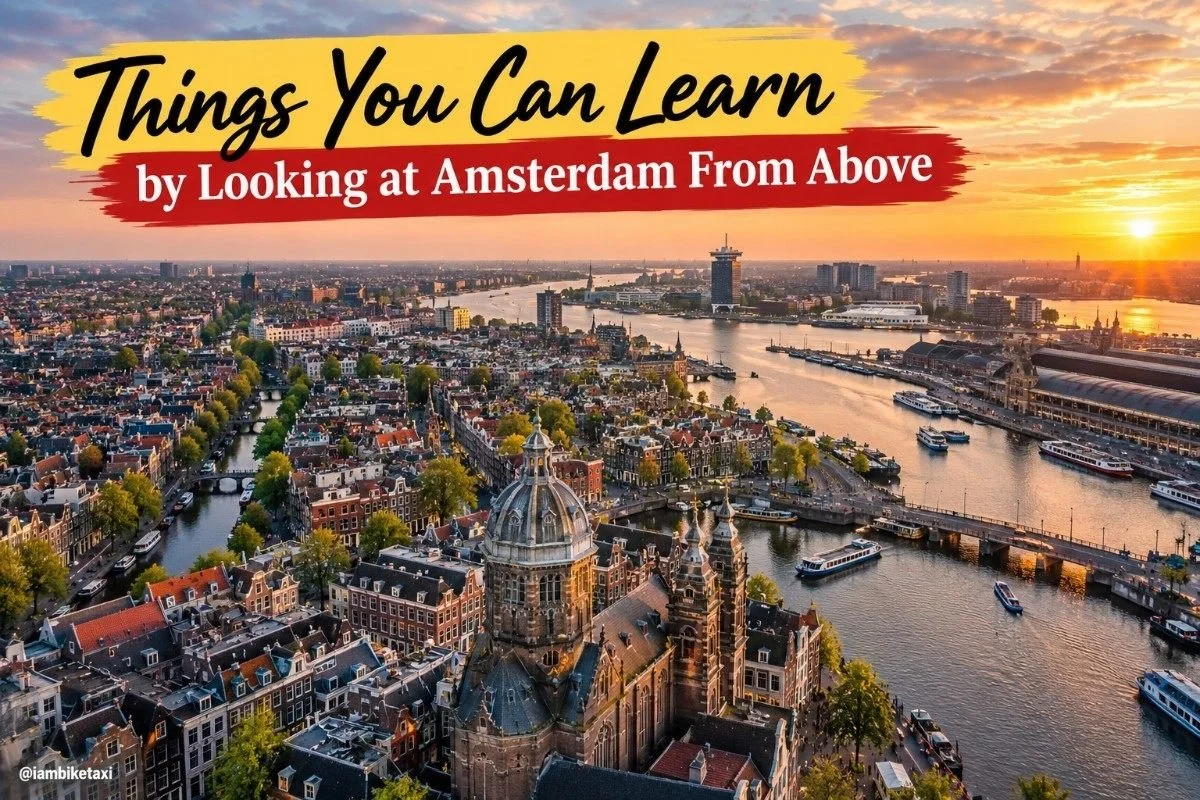
Things You Can Learn by Looking at Amsterdam From Above
Amsterdam looks beautiful from street level, but seeing it from above reveals a different story. The city’s famous canals form patterns, its rooftops preserve centuries of history, and its streets show how people move around one of Europe’s most distinctive cities.
From the historic canal belt to modern buildings beside the IJ waterfront, every view reveals something interesting. 👀
1. 🌊 The Canals Reveal How Amsterdam Was Planned
When you look at Amsterdam from above, one of the first things you notice is the pattern of canals curving around the historic centre. They are not randomly placed. Much of the famous canal belt was planned and developed during the 17th century as Amsterdam expanded.
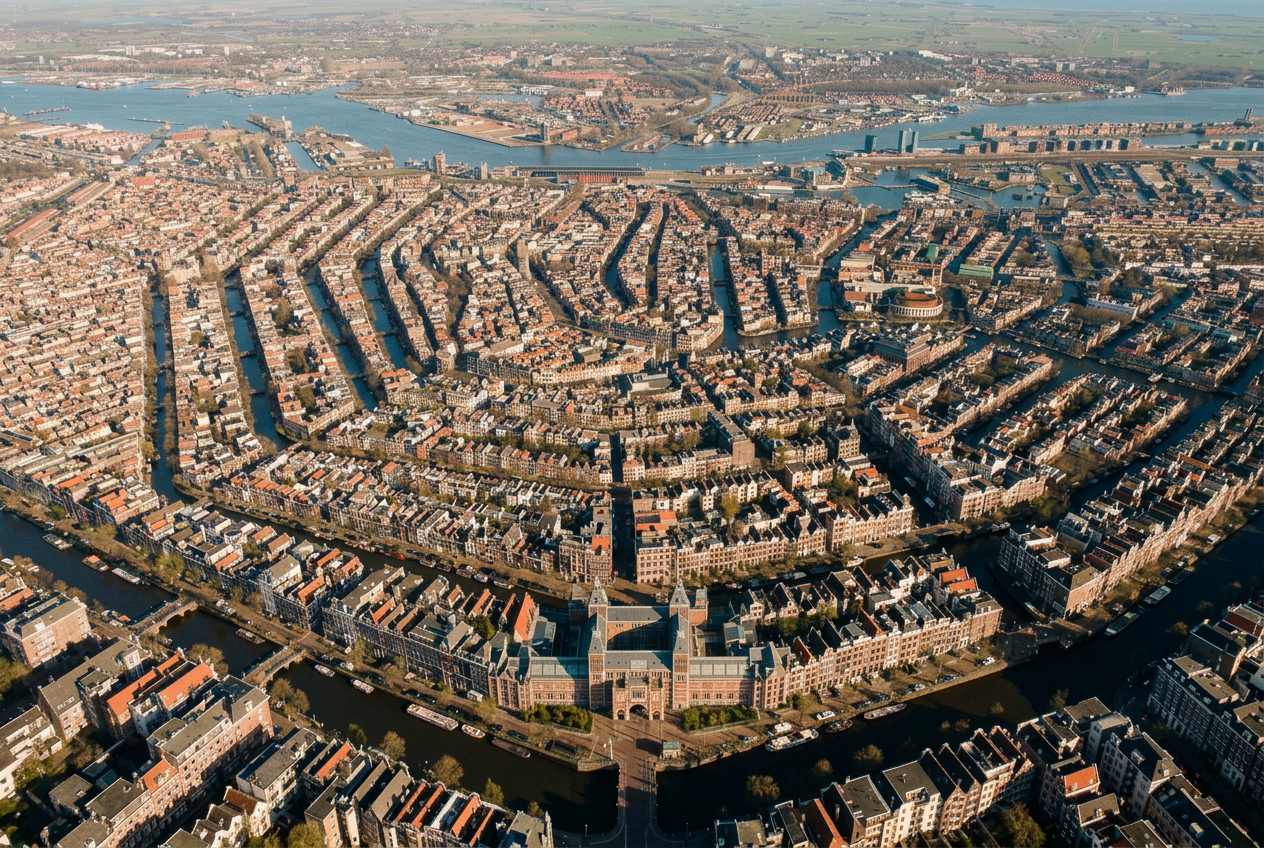
The canals helped create land for new buildings while providing routes for transporting goods and moving around the city. This remarkable urban design is one reason the historic canal ring became a UNESCO World Heritage Site in 2010.
What you can learn:
The canals follow a planned, curved layout.
Waterways helped shape the city's expansion.
Historic planning still influences Amsterdam today.
2. 🏘️ The Shape of the City Tells Its History
From above, Amsterdam does not look like a city built all at once. The older centre has a more irregular street pattern, while parts of the later canal belt follow a more organised design.
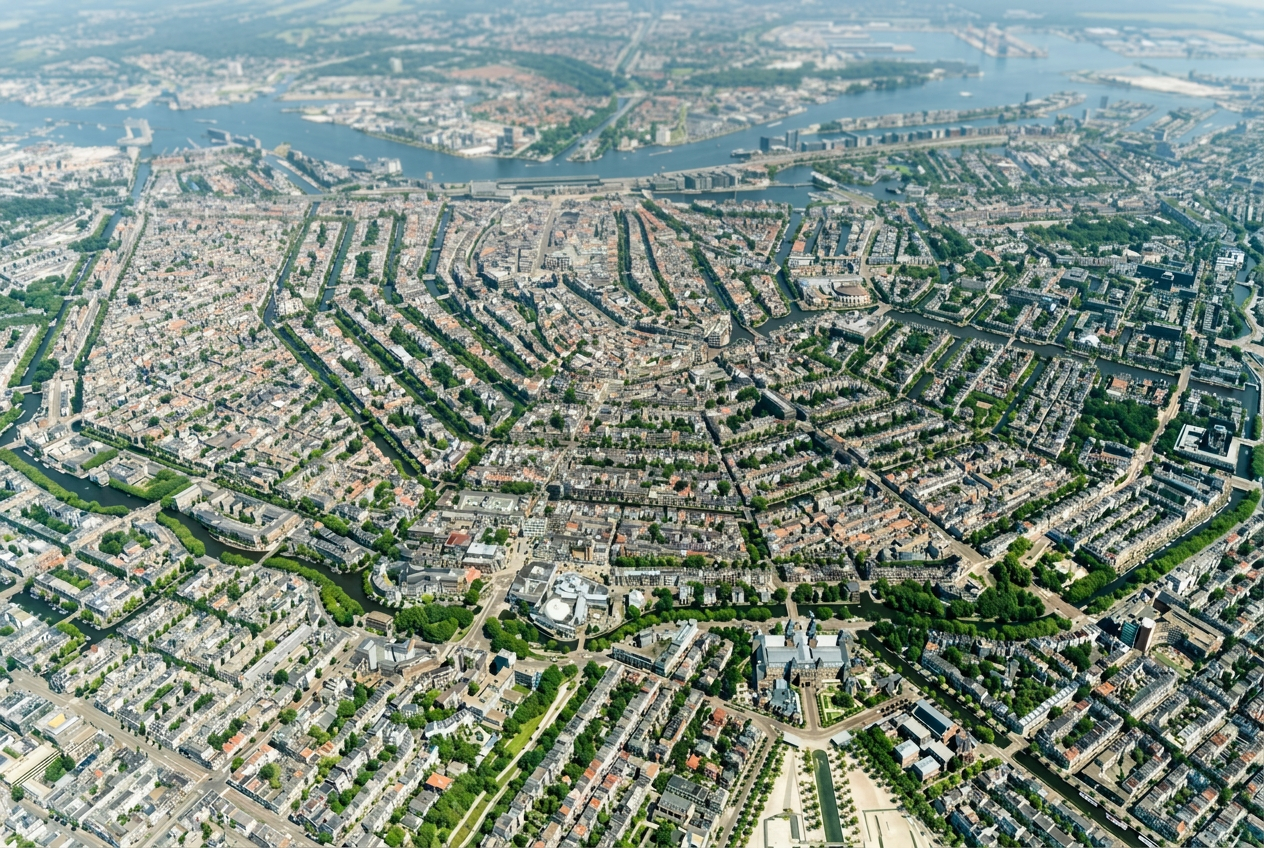
This difference reflects how the city grew over several centuries. The medieval centre developed around the old settlement and harbour, while later expansions introduced new streets, canals, and residential areas.
You can see how different periods of history fit together in one city.
What you can learn:
The historic centre developed before the outer canal belt.
Later neighbourhoods were planned more systematically.
Amsterdam's layout reflects centuries of urban growth.
3. 🏠 The Narrow Houses Make More Sense From Above
Amsterdam's traditional canal houses are famous for their narrow façades and tall, closely packed buildings. From street level, you mainly notice their decorated fronts. From above, you can see how tightly the buildings fit together along the canals.
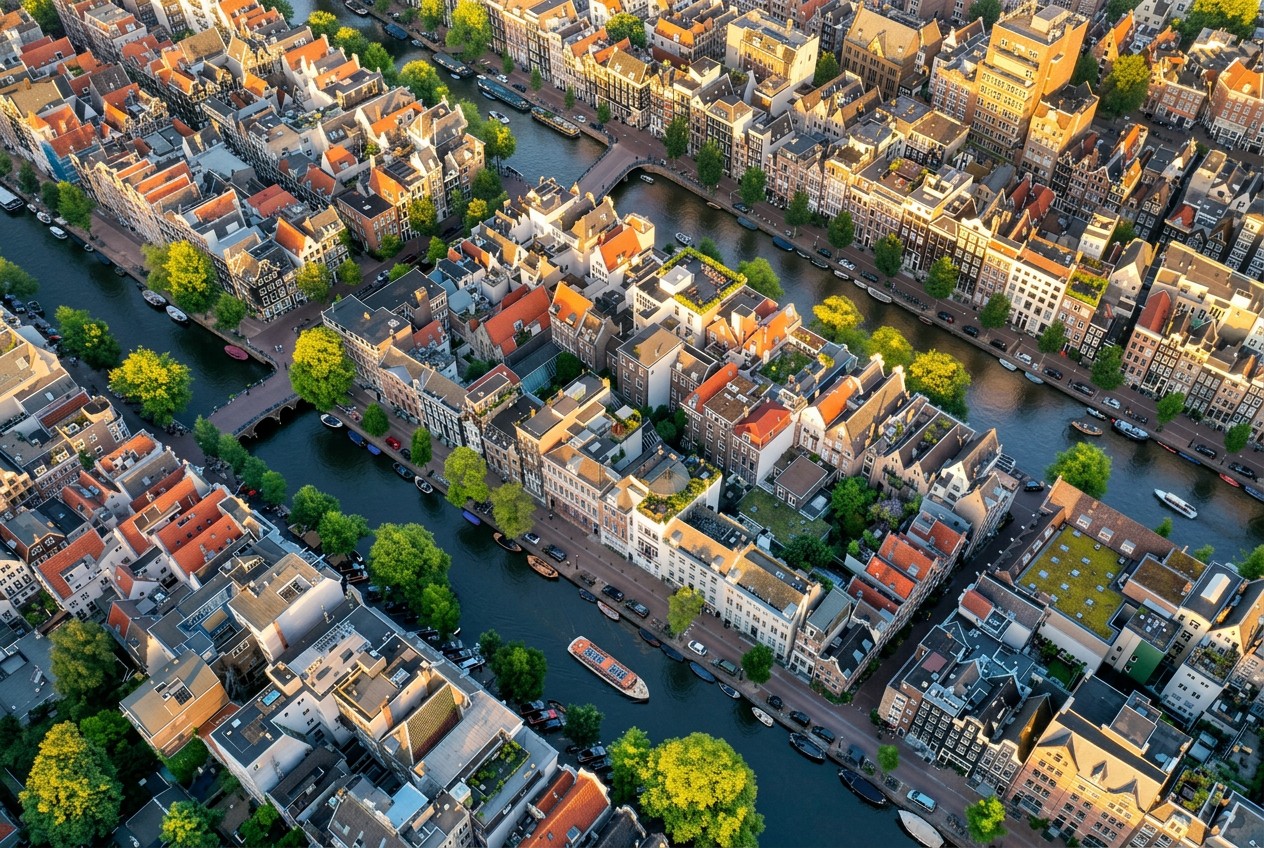
Many historic plots are narrow at the front and extend deep into the block. Some houses also have rear extensions or courtyards, creating a layout that is difficult to understand from the street alone.
These buildings reflect the way Amsterdam developed as a busy commercial city, where homes, offices, workshops, and storage spaces could exist close together.
What you can learn:
Building plots can be narrow but surprisingly deep.
Houses fit closely together along the canal streets.
Historic buildings often combine different uses and spaces.
4. 🏛️ Rooftops Reveal Amsterdam's Architectural History
Look closely at Amsterdam's rooftops and you will notice that not every house has the same shape. Some have stepped gables, others have curved outlines, and some have flat-topped or corniced façades.
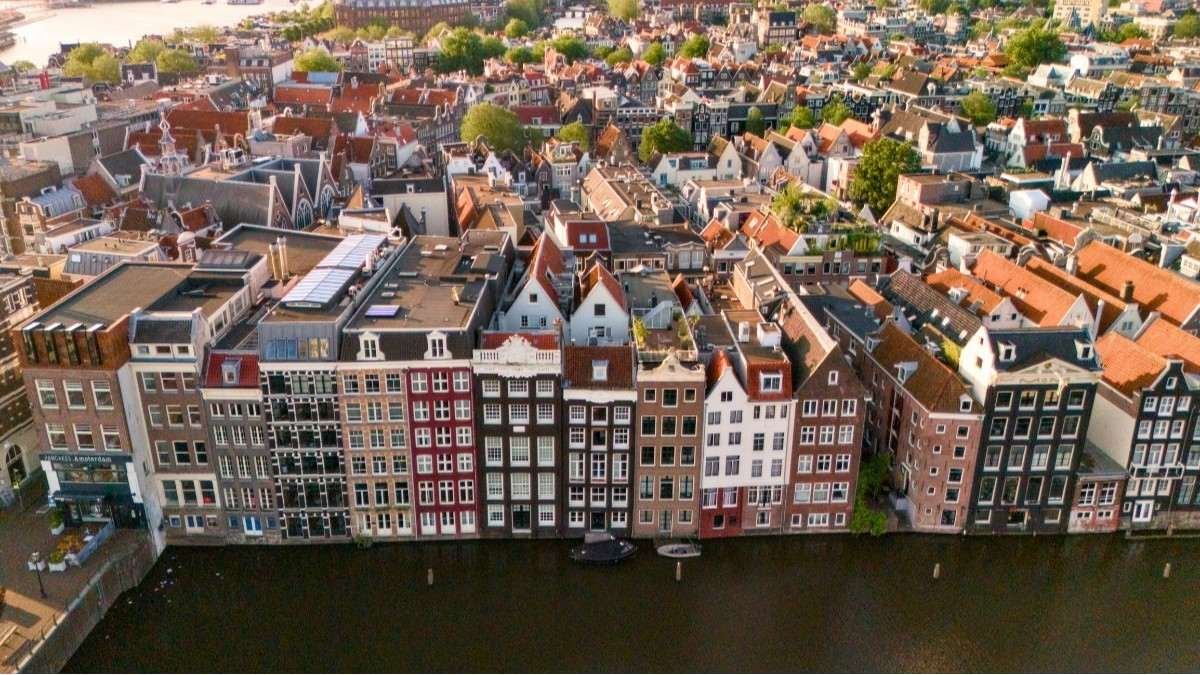
These differences help explain why the historic centre looks consistent without being identical from building to building. The houses share a traditional urban style, but their rooflines and details vary according to their design and period.
From above, you can also notice how the roofline creates a continuous pattern along the canals, with church towers rising above the surrounding buildings.
What you can learn:
Gables are an important feature of historic Dutch architecture.
Different roof shapes give individual buildings their character.
Church towers help define the city's skyline.
5. 🌉 Bridges Show How Water and Streets Connect
Amsterdam's bridges are more than attractive photo spots. They connect neighbourhoods separated by waterways and help the city function as one connected place.
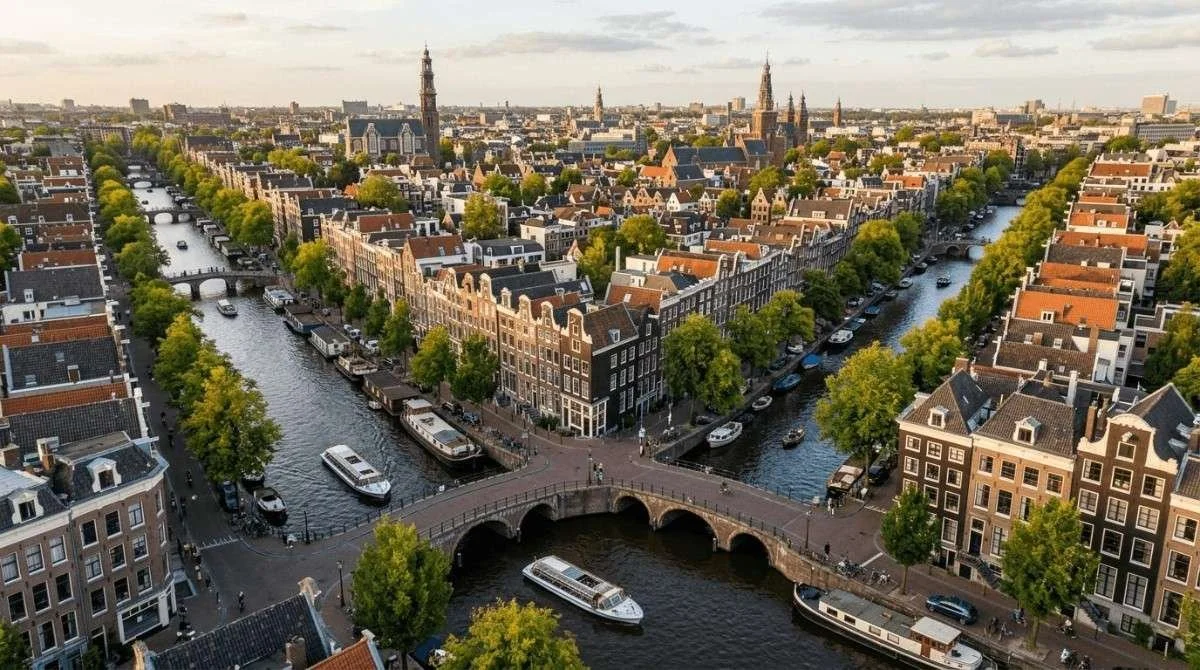
From above, you can follow streets as they cross canals and see how bridges form important links in the street network. Some bridges are small and simple, while others have distinctive shapes or drawbridges that allow boats to pass.
The relationship between canals, bridges, quays, and streets is an essential part of Amsterdam's historic design.
What you can learn:
Bridges connect streets across the canal network.
Waterways influence how streets are arranged.
Bridges support both everyday movement and water traffic.
6. 💧 Water Management Is Part of the City's Design
Amsterdam's relationship with water is not just about scenery. Water management has been central to the city's development for centuries.
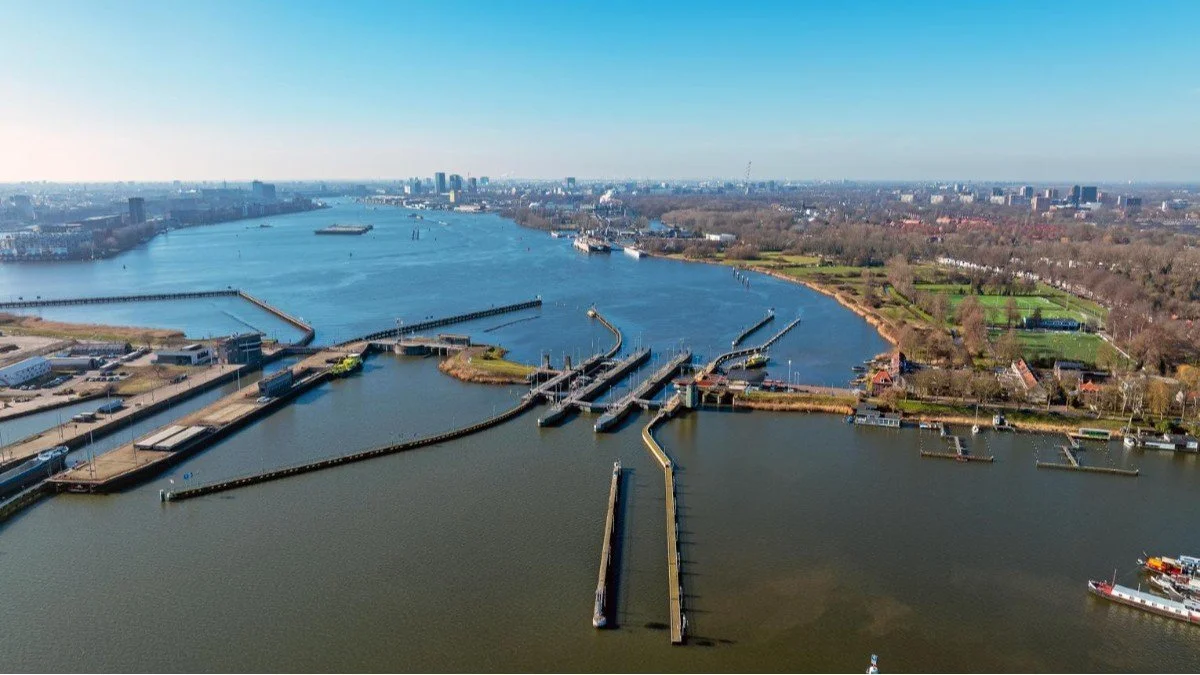
The surrounding low-lying landscape required careful control of water levels and the creation of suitable land for construction. Canals, drainage systems, locks, and quay walls all played roles in managing water and supporting transport.
From above, you can see the waterways that form part of this larger system. The view is a reminder that Amsterdam's distinctive appearance depends on both urban planning and water engineering.
What you can learn:
Water management helped make urban expansion possible.
Canals serve more than a decorative purpose.
Engineering has shaped the city's landscape for centuries.
7. 🚤 Houseboats Show How Amsterdam Uses Its Canals
Look down at Amsterdam's canals and you may spot houseboats lined up along the water. They are a distinctive part of the city's everyday landscape.
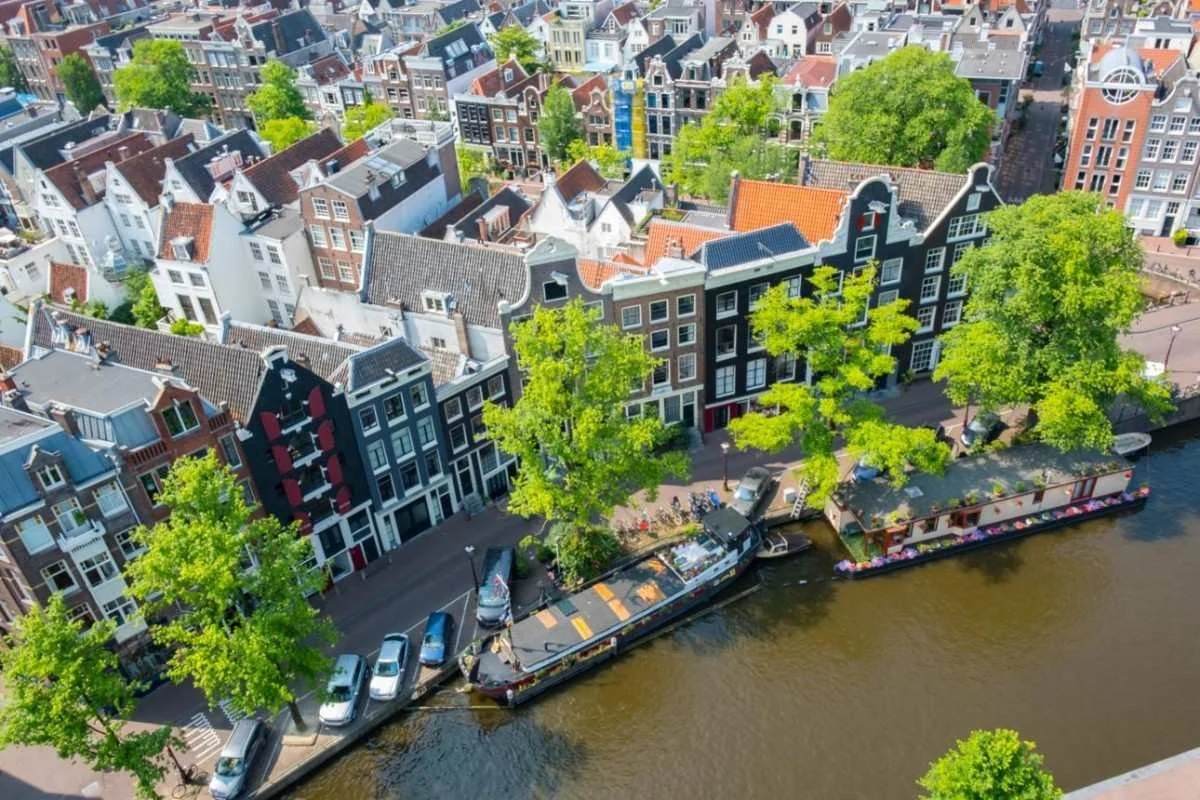
From above, you can see how these boats occupy the edges of the canals alongside bridges, trees, and traditional buildings. They also show that Amsterdam's waterways are living spaces, not just places for sightseeing.
Houseboats have a long history in Amsterdam, and the city's canal heritage includes both the buildings along the water and the boats that have become part of its character.
What you can learn:
Some residents live directly on the water.
Canal edges are used for more than transport.
Houseboats are part of Amsterdam's distinctive urban identity.
8. 🌳 Trees and Green Spaces Are Built Into the City
From street level, the trees along Amsterdam's canals can sometimes hide the buildings behind them. From above, you can see how rows of trees follow the waterways and add green lines to the city's built-up areas.
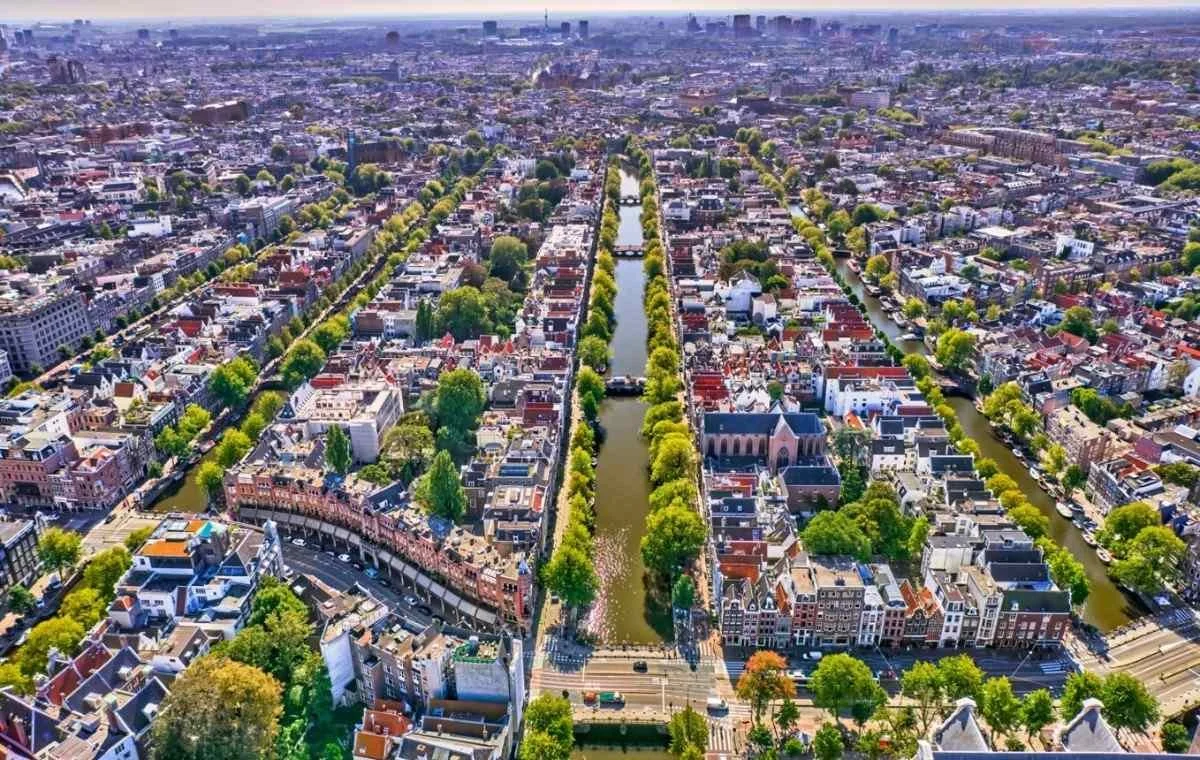
You can also spot parks and larger green spaces between neighbourhoods. These areas create a contrast with the dense streets and closely packed houses of the historic centre.
Greenery is not simply an extra layer of decoration. Trees and public spaces contribute to the character and experience of Amsterdam's urban landscape.
What you can learn:
Trees often follow the lines of the canals.
Parks provide open space within the urban area.
Greenery softens the appearance of dense historic neighbourhoods.
9. 🏙️ Old Amsterdam and Modern Amsterdam Share the Skyline
Amsterdam is not frozen in the past. Look beyond the historic centre and you can see modern buildings, newer residential districts, and contemporary architecture alongside older structures.
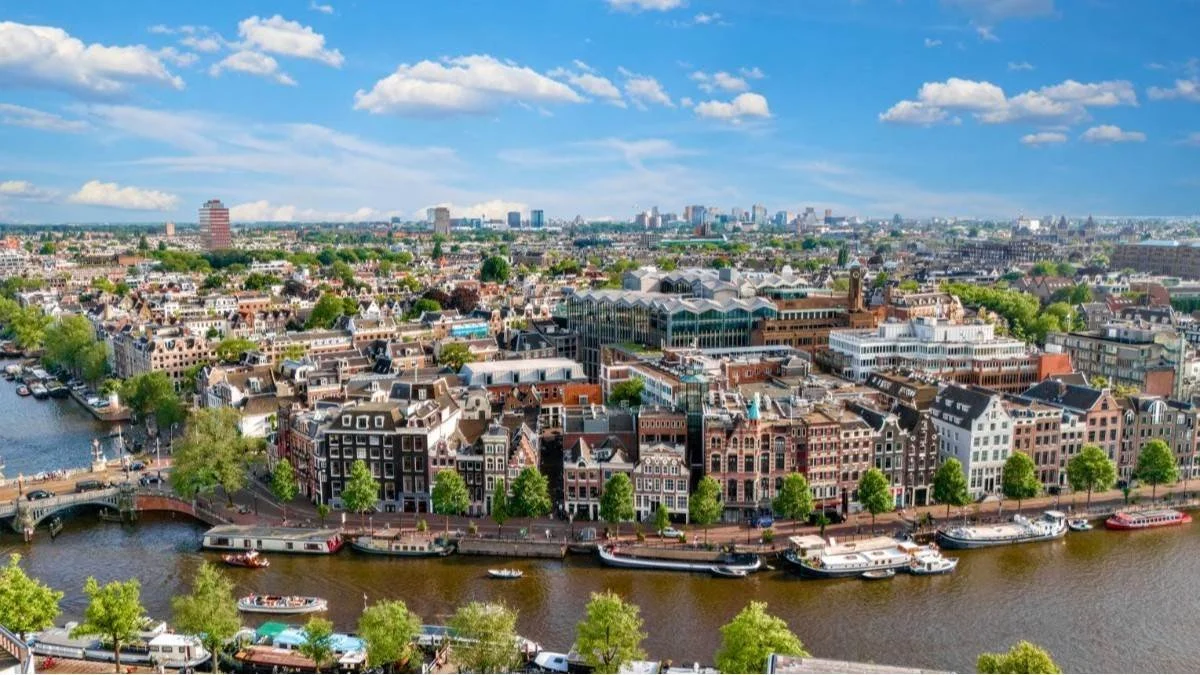
The contrast is especially noticeable around the IJ waterfront, where modern development creates a different skyline from the traditional canal houses. The historic canal district also faces the challenge of protecting its character while the wider city continues to develop.
Looking at the city from above helps you understand how Amsterdam balances its historic character with the need to develop and accommodate modern life.
What you can learn:
The historic centre and newer districts have different skylines.
Modern buildings form part of Amsterdam's ongoing development.
Protecting historic views is an important planning consideration.
10. 🚲 The City Is Designed Around Different Ways of Moving
From above, you can see that Amsterdam's transport system is made up of many connected elements. Streets, bridges, tram routes, railway lines, and cycle routes help people move through different parts of the city.
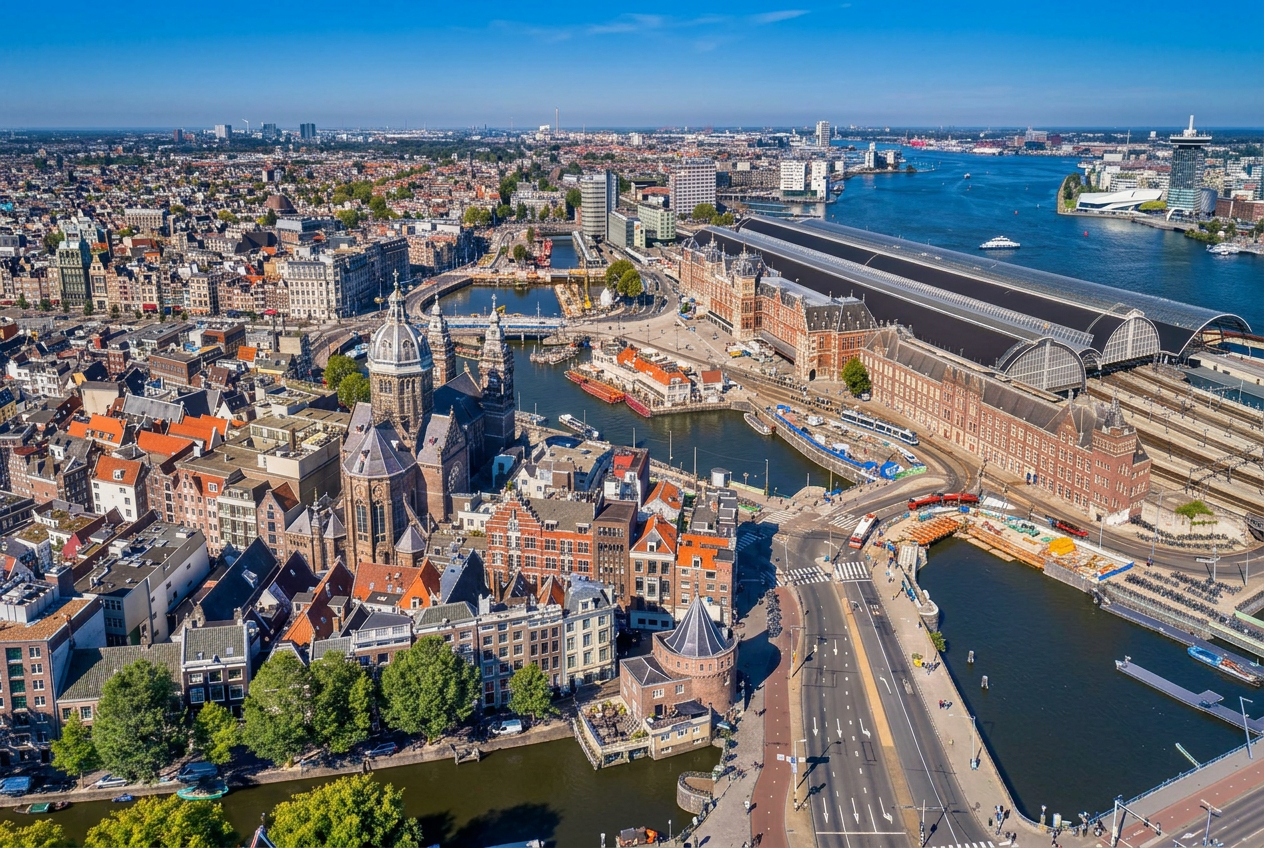
The historic centre developed around waterways and narrow streets, while newer areas have their own road and transport layouts. Looking at the city as a whole makes it easier to understand how these different systems fit together.
Amsterdam's identity is strongly associated with cycling, but the city also depends on public transport and walking. The aerial view shows a connected urban network rather than a city built around just one way to travel.
What you can learn:
Transport routes connect historic and modern neighbourhoods.
Bridges and canals influence how people move around.
Cycling, public transport, and walking all play important roles.
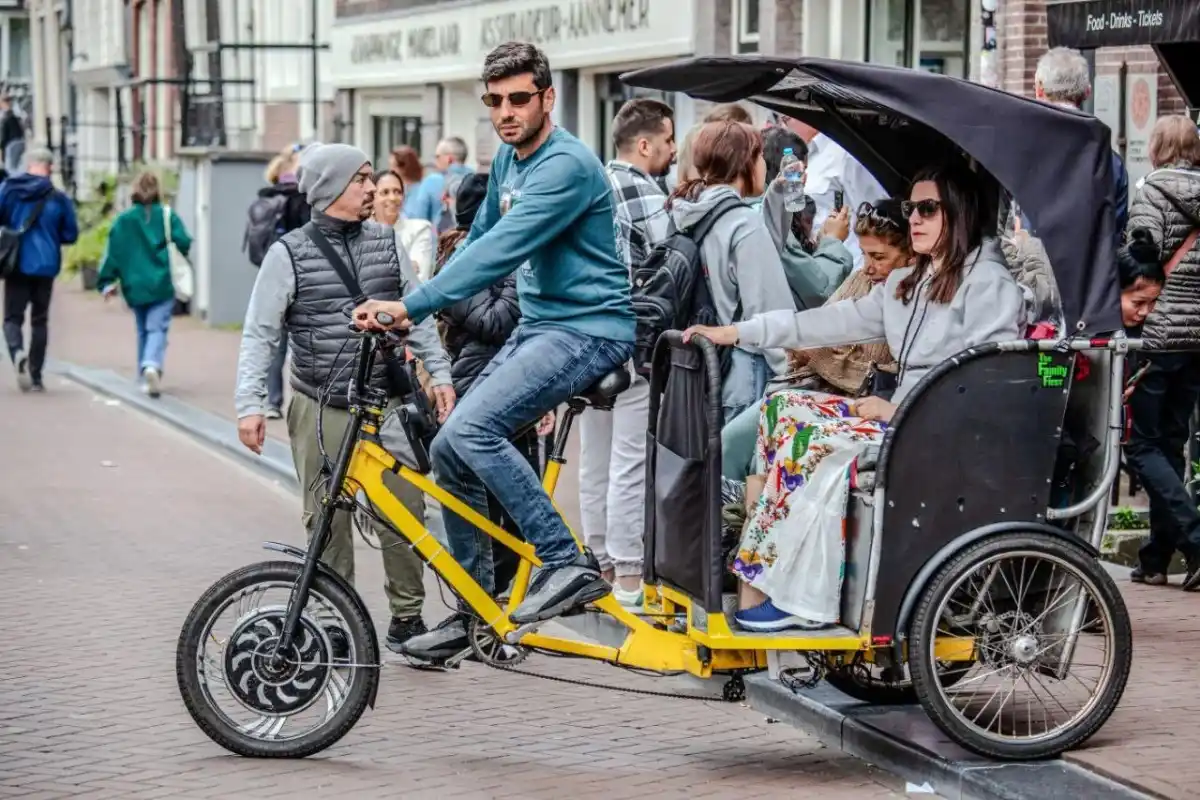
Explore Amsterdam by Electric Pedicab
Private rickshaw tours · From €12 · Local guides · Mon–Sun 8AM–6PM
Before heading out on your day trip, explore Amsterdam the fun way — by private electric pedicab. Cruise through canals, Jordaan, and hidden streets with a friendly local guide. No crowded trams, no tired legs — just a relaxed Amsterdam experience.